Showing posts with label Facebook. Show all posts

Sunday, November 6, 2011

Klout Is Annoying Me

061111_ cobwebs 2Image by Headphonaught via FlickrI'm not one of those people who was annoyed a week or two ago when Klout radically changed their scoring method and recalculated everyone's scores going back several weeks using the new formula. Maybe that's because mine went up a little or maybe it's because Klout had made less significant changes previously and had always recalculated peoples scores. Throw in the fact that the site clearly says "Beta" and it should be clear that changes are going to be made.

Having said that, I am getting a bit frustrated with Klout right now. The changes were supposed to make it more transparent as to why your score was going up or down. I still don't have a clue. I've been seeing a steady decline over the past week in spite of no changes in my level of activity and modest additions to my Twitter followers and upticks on other social networks as well. In short, I can see no connection between the decline and what is happening in the real world.

To be fair to Klout, my "True Reach" is going down in spite of the fact that my "Network" score is growing. So it seems likely my score is declining due to my downward trending "True Reach" but an examination of changes in my network over the past week shows no obvious reason for that. Transparency is great, but only if it actually gives you enough information to understand what you're being told. That just isn't the case here.

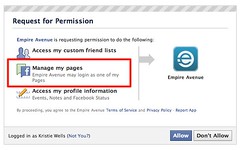
The other thing that Klout has done recently to annoy me is scrape my Facebook friend info. Yes, I gave the application access to my profile. That was a mistake and it's been rectified. The reality though is that it should never have been able to happen. Facebook continues to have a very lax regard for the privacy of the social graph and that has implications that not everyone is going to understand or appreciate. I feel like Klout took advantage of my trust to invade the privacy of my friends. That's not something I'm comfortable with.

I'm thinking of totally pulling the plug on Klout at this point. I'm going to give the whole thing some more thought though and review my options in another week or two.
Enhanced by Zemanta

Wednesday, October 5, 2011

Apple iPhone Aftermath, Bad Labeling?

Image representing Siri as depicted in CrunchBase
I wasn't as accurate on my predictions yesterday as I would have liked but Thats part of the fun when trying to guess what Apple is up to. I did get some things right including my conclusion that people would be disappointed if the new iPhone just turned out to be a rehashed iPhone 4. The ironic thing is that this iPhone is arguably as different from the previous generation as any other has been with the possible exception of the original iPhone 4 when compared to the 3GS. This illustrates the importance of getting every detail right when launching a product, including the naming.

Apple apparently doubled the RAM from 512 meg to 1 gig(I'm seeing conflicting reports on this), significantly upgraded the rear camera, upgraded the CPU and graphics and integrated both CDMA and GSM into one phone with HSPA+ thrown into the mix for those on GSM networks that support it. Would anyone have blinked if they had called this the iPhone 5? I certainly wouldn't have.

Part of the problem is the amount of time this phone took. We waited an extra four months for this. People were expecting something awe inspiring. Calling it the 4S may have been a misguided attempt to manage expectations?

The other issue here was of course the absence of Steve Jobs. This was Apples first chance to shine with Jobs not on stage. Put simply, they didn't  there were some bright spots.

Siri is a nice piece of technology. More importantly to Apple's long term bottom line though it is also going to make them a part of the "conversation" people have with their phones. Currently a big chunk of that conversation takes place with Google or Facebook. With Siri Apple has displaced Google for many tasks and will likely displace them further as this technology rolls out to more devices and becomes more refined. There is speculation that Google has similar functionality in the works at its easy to see why they would. This is the way many people have dreamed of interacting with their phones for awhile now.

Another thing that impressed me was "Find my Friends". Not so much the technology itself, which has been done before; but instead the fact that APple actually thought to give people the ability to turn it on with an expiration day/time. If you're on a family trip to Disneyland then you might be willing to turn on that tracking just for the convenience of being able to keep track of where everyone in your group is but that doesn't mean you want your personal space invaded that much normally. It's that kind of design decision and attention to detail that separates Apple from their competition.

While there was a disappointment in the short term I don't think it will linger much. This does put additional pressure on them though for the next big announcement. Apple's growth over the past several years has been nothing short of phenomenal and maintaining anything close to that pace is unrealistic. With Jobs role being deemphasized Apples current management is likely going to get a lot of blame for any slow down even though it may be part of the normal growth cycles that companies go through. Steve Jobs is going to be a hard act to follow not only because he is brilliant but also because of when he stepped aside. I don't envy Tim Cook one bit. He's in an almost impossible to win situation.

Image via CrunchBase
Enhanced by Zemanta

Friday, September 23, 2011

Facebook's Timeline And Why I'm A Doubter

Ford Model T Touring
I've covered some of this ground over the past couple of days but there are a few new thoughts here and I've refined my thinking a bit.

First of all I'm going to say that I'm not making predictions here and I'm not confident I'm right. As I've alluded to in my previous couple of entries though I do have a nagging suspicion that a lot of people are looking at Facebook and their changes in a way that doesn't actually make sense. I've seen a lot of cool technologies that were loved by tech types (including myself) come and go over the years because they did not in fact appeal to a wide enough audience. This feels like a case in point. I'll be dropping this topic after today and taking a wait and see attitude though I may comment more in the future as things develop.

The first point to keep in mind is that Facebook essentially owns the social graph. This means nearly everyone you would want to communicate with is on Facebook. That includes not only your tech savvy friends but also people who are not. Different kinds of people have different priorities, needs and desires. As a long time tech geek and intermediate social networking participant I'm going to desire a different interface and volume of content than my seventy eight year old mother. This general concept explains why companies offer a variety of products in whatever market they compete in. Think cars for instance. Early in the history of the Ford motor company Henry Ford was quoted as saying you could have any color you wanted so long as it was black. Over time Ford added additional colors and models to their product line in order to entice more customers to buy from them. These customers weren't necessarily being fickle or stubborn either. If you needed to haul stuff around than a truck was much more useful than a car.

The second thing to keep in mind is that most of the people in the press who follow Facebook as well as the people creating Facebook are tech and social networking savvy. They are advanced users who handle change with much more comfort than much of the Facebook user community. The problem with this scenario is it means that a substantial % of Facebook's user base has little or no voice inside the company or from within the tech press. Their only avenue for expression is via the mechanisms Facebook provides for feedback and based on what I've been reading Facebook isn't very responsive in answering complaints that are voiced by their user community in those forums. I suspect this is because they are busy, they've seen this phenomena before and because they just don't understand what all the ruckus is about.

Facebook does have a marketing department but I wonder what the average age and background is and how comfortable they would feel saying "Hey developers, that stuff is neat and all but does it really address the needs and desires of the bulk of people using our site". I can't know for sure of course since I don't work there but based on my own workplace observations over the years I tend to suspect the answers are mostly under thirty five and "not very".

All of which leads to a very large blind spot for Facebook and the press that covers them, or so I theorize. What makes this blind spot more difficult to spot is the fact that other social networking sites don't have nearly as big a worry in this area since their customer bases are much smaller and more tech savvy.

Facebook has made changes before and after an initial period of discontent things have settled down until the next big change. Owning the social graph gives them a lot of leverage and makes it difficult for people to leave if they want to keep in touch with their friends. For the past several years there wasn't a credible alternative either which helped as well. It shouldn't be assumed though that the discontent simply goes away.  Based on comments people are making recently it's clear that much of that discontent lingers below the surface until the next change. At some point Facebook may reach a tipping point. I'm not convinced they have but I am convinced its possible. I've seen modest growth in the number of people I know on Google+ over the past week or two. At this point it's a trickle but with further changes coming it isn't outside the realm of possibility that it become a flood in the coming months. I'm not betting on that but it sure wouldn't surprise me either.

Consider also that the tech savvy types have numerous other social networking outlets where they can find both their tech savvy friends and interesting people to talk to and Facebook's dependence on their less geeky members becomes even more important/clear. If they start losing their "main street" base things will go very badly for them.

The next big change is Facebook's Timeline feature. I've read about it and checked out the demos and while it's techy cool I don't see the broader appeal primarily because it's going to take a lot of time and effort to curate it down to something manageable/attractive and I seriously doubt very many people are going to bother, particularly after the initial euphoria over the new capability wears off.

Using Facebook has increasingly become a "drink from the fire hose" experience and Timeline is just another step in that direction. It certainly has utility, particularly for people who want to make it easy for old friends who have been out of touch for awhile to catch up but is that utility enough to get people to actually maintain and read what is there?

I'm not against innovation. I am against creating products that fail to please large portions of a companies customers and it seems  to me that this is what Facebook is doing. If I were them I wouldn't give up on the innovation though. Instead I'd design my site so that it was possible for people to customize how they interact with it. By default I'd give people a very simple view that minimized the amount of clutter and information overload and maximized their ability to keep in touch with the people they cared about the most.  If you're wondering what that might look like, think Facebook three years ago or so. I'm not familiar with the FB API, but I suspect it wouldn't be hard for somebody to create a "lite" front end that minimized the bells and whistles while maximizing the experience. I'm not sure how Facebook would react to that though. Next, structure the site so people have an incentive to explore the more advanced features. Allow them to wade into the deeper parts of the pool slowly and in a way that they feel comfortable with. Also allow them to stop at any time. Not everyone is going to have the same sweet spot.

Mark Zuckerberg is one of the few humans alive today who in my opinion has the potential to be the next Steve Jobs. He's clearly brilliant and has a drive and clarity of vision that is very rare. Much like the young Steve Jobs though he isn't without his rough edges. One big question in my mind is will those rough edges eventually lead Facebook into a downward spiral or will he learn and adapt quickly enough to avoid that? As with all things, time will tell.

Image via Wikipedia
Enhanced by Zemanta

Thursday, September 22, 2011

Not Everyone Is A Geek (Facebook)

My Social Graph
I'm pressed for time today so this one will likely be short, minimally edited and perhaps a bit more jumbled than normal logic wise. The topic is highly news worthy right now though and I really want to get something out.

Facebook is apparently going to release/announce even more changes today and many in the technical press are waxing poetic about how wonderful it is going to be. Great, I don't doubt that people who love technology are going to be impressed. Frankly though that doesn't matter because the vast majority of Facebook's seven hundred and fifty million users are not tech savvy geeks. They are just people who want to hang out with their friends and family and share the occasional thought or event. They want a platform that intrudes minimally on their ability to do that and each "feature" beyond that happy minimum clutters their experience and leads to confusion and frustration.

Those of use who are of a geeky persuasion have always made up a disproportionate percentage of the users on most online services. Yes, the representation online has broadened substantially in the past fifteen years but until Facebook there was never a site that appealed broadly to almost everyone.

Facebook isn't run by normal people. It's run for the most part by a core group that are under the age of thirty, highly tech savvy and very bright. That description matches a substantial percentage of the work force as well. They are creating features that they think are cool, and they are right. If you're under thirty and highly tech savvy. This isn't to say that there is zero appeal outside of that core group, but the amount of appeal is going to be much more limited for many of these new features.

This likely explains why so many people complain every time Facebook rolls out a new round of changes. Much of that complaining is just a fear/dislike of change which is much more common outside of the technical community than it is within. It's easy to dismiss those complaints as meaningless in the longer term but I'm not convinced they are. With each successive major overhaul it has seemed like the level of complaints have increased and the amount of activity I see on Facebook has gone down. Keep in mine that the vast majority of the people I hang out with on Facebook are over forty years old, as am I.

This latest round of changes seems focused on turning Facebook into an all inclusive platform, almost an OS. You could in theory create devices that ran Facebook as an overlay. Add an HTML 5 browser and you would never have to leave. I can see the appeal of that for tech types, particularly the tech types working at Facebook but will it appeal to the majority of their customers who just want to hang out with their friends with minimal clutter and noise?

Facebook owns the social graph. This is their biggest asset right now and a big part of the reason they've been able to get this far in the changes they are making. They risk is that they'll reach a tipping point where large numbers of people are no longer willing to deal with the changes and the complexity they introduce and start leaving. Are we at that point now? Too early to tell but I think we're close. The next month or two will be very interesting for Facebook and social networking in general.

I halfway seriously made a comment on Twitter in response to something I read that Apple should create a simple cross platform social network similar to early Facebook. Apple understands the importance of simplicity and could probably pull this off fairly quickly. They also have a large and seemingly ever growing legion of fans who are willing to at least try anything they bring out. Could they supplant Facebook with such a service? I'd like their chances more than I do Google's.

Image by krazydad / jbum via Flickr
Enhanced by Zemanta

Wednesday, September 21, 2011

Did Facebook Make A Mistake?

Profile shown on Thefacebook in 2005
It wasn't hard to figure out what to talk about today. Facebook has featured prominently in technology news over the past day or two and I'm seeing a lot of negative comments from my Facebook friends.

From a usability perspective Facebook "updates" are always a mess but this one seems worse than normal. I've always been under the impression that most people who use Facebook don't want a bunch of innovation and/or change. All they really want  is a place they can hang out with their friends and family without having to think much about the interface or being distracted by a bunch of extraneous stuff that makes it harder for them to meet that basic need. Facebook used to be relatively simple and met that  need well which is why they ended up owning the social graph in the first place.

As time has gone on though they've had a tendency to get away from that simplicity and add an ever increasing number of features that take away from their core value to the bulk of their customers. This trend has accelerated recently with the emergence of Google+ as their first legitimate competition in years.

Facebook is also preparing for a public offering of their stock and is thus motivated to make changes that enhance their core value to current and future shareholders. The ironic thing is that actions that in the short term favorable to share holders often end up being unpopular and unfavorable to stakeholders such as customers which in turn leads to lost value for shareholders.

One thing that makes Facebooks task more difficult is the fact that their most important customers are advertisers. Facebook has a relationship that is analogous to that of most TV networks. Generally TV networks are supported by advertising but without viewers a TV network has no business. The tricky bit is that too much advertising alienates viewers who in turn tune out which makes advertisers unhappy. It's a difficult balancing act.

In defense of Facebook, some of the changes they've made aren't bad. Providing automatically categorized lists (AKA circles) and making it easy to add people to these lists is a nice feature even if they didn't embrace this change until Google+ built a lot of their early momentum on it.

One problem I've encountered is that things I've "liked" no longer seem to be showing up in my news feed and there is no obvious way to add liked things to one of Google's new auto generated lists. I'm highly selective with my likes which makes it frustrating that right now I'm missing out on at least some of the content that is being shared by way of these likes.

One challenge all incumbents have is figuring out when to stand pat and when to react to their competition. You can wait too long or you can move to early. Either one of those scenarios can lead to lost customers. If I were to guess right now I'd say Facebook has moved to fast and too early. Having said that I think there is a good chance that people will settle down and relax over the next week or two. That's the typical scenario when Facebook rolls out new changes. Facebook may actually be in a bit of trouble if things don't play out that way.

On a related note, Google+ is now open to anyone who wants to join so if you've been thinking about checking it out and are annoyed with Facebook now's as good a time as any. Having said that, I'm not leaving Facebook any time soon. I find the two services to be complimentary though I prefer Google+.

Image via Wikipedia
Enhanced by Zemanta

Thursday, September 15, 2011

Semi Random Nick Knacks

Oracle Headquarters Redwood Shores
It's been a few days since my previous entry which is as long as I've gone without making a post in months. It isn't writers block, I can think of many things to talk about but finding time has been even more difficult than normal.

In no particular order here are some brief "drive by" comments on recent news items.

Google has apparently bought 1K plus more patents from IBM. Google started the current patent war woefully under armed and has been playing catch up over the last several months. Patents aren't granted quickly so to remedy their shortcoming they've been paying a premium to build their arsenal. They are likely to make additional purchases over the next several months. Google still has a lot of cash and it's not hard to figure out what their most pressing need is. They can keep up with anyone on the innovation front but that means nothing if they and their partners get sued into oblivion. Lesson learned, being disdainful of software patents may be hip and intellectually correct but sadly it's very bad for your business.

Facebook continues to add features at a rapid pace. Clearly they are emulating rather than innovating. They've had a history of confusing and annoying their customers and have continued to grow so the risk of making changes is probably low. There is a chance they'll probably lose a few people but they were having that problem anyway with Google+. On a positive note, I got an email from Facebook a few days back saying they would be sending me less email and explaining why. This was a very positive change for them and pleasant to experience. They are still prone to making changes with zero notice that have significant impacts on how people use the service but sending out that email was hopefully a sign of things to come. I can hope anyway.

On the jobs front, I don't see existing companies adding a lot of jobs. There are structural reasons for this. They are making record profits right now selling their goods and service to parts of the world were the economy is much better than in the US. When they are creating jobs those jobs are overseas. It also means that most of the profits are staying overseas as well. Net impact here, minimal other than an undervalued stock market. New jobs have been and will continue to be generated by new companies. Any jobs stimulus bill that wants to have a real impact is going to have to focus primarily on creating new companies.

Microsoft released the first Windows 8 preview. I really like what I'm reading in regards to the direction their heading and did take the time to download the preview. Unfortunately it doesn't run on a VMWare player so I'm SOL for now. There are reports that it runs on Oracle's Virtual Box and the full VMWare Workstation. I don't own either so that doesn't help. It does feel like an oversight on Microsoft's part not to run on  the free VMWare player. Few people are going to be willing/able to install the preview on a dedicated piece of hardware. This isn't a fatal flaw but it is a small bump in the road. It is easy to get a thirty day trial of VMWare workstation but that is more work than I'm willing to devote to this for now.

Time to get ready for work and deal with a few other things. Happy Thursday everyone.

Image via Wikipedia
Enhanced by Zemanta

Monday, September 12, 2011

Facebook Hates Privacy? (Short Take)

Privacy Lost
I went to make an entry into my Facebook this morning and realized that by default it was going to be public. Look in the lower right corner of the entry box to see who is going to see what you are posting. I'd had a custom view setup previously so it seems like yet again Facebook has changed something in a way that may cause people to inadvertently post in a more public way than they had intended.

It was reasonably simple for me to reset my default to something more in line with what I desired but the experience was still annoying and typical of what we've seen out of Facebook in the past.

There are two reasons I still post on Facebook. One, a number of the people I keep in touch with there are still not on Google+ or any other service and two, in theory the platform supports controlled sharing with the default having been reasonably private.

I'm sure they must have avoided fumbling one of these changes at some point but I sure as heck can't recall it.

In an odd and hard to explain coincidence as of this morning Klout now has me listed as being influential on the topic of Facebook. This is the first and so far only topic Klout has tagged me for. I mostly find it odd since I don't think I've spent that much time talking about Facebook in comparison to other companies.

Image via Wikipedia
Enhanced by Zemanta

Tuesday, September 6, 2011

Engagement And Social Networking

Empire Avenue: Facebook Fan Page Request for P...
I've been spending a lot of time on my side project over the long weekend which didn't leave much time for blogging. Now it's time to go back to the day job so I'm not sure how active I'll be here over the next few days.  I learned how to multitask and be productive while pursuing my MBA and working full time but there are only so many hours in the day and something has to give. So far it's been my guitar making and this BLOG.

I'm starting feel like less of a neophyte in the social networking space. I won't say I'm an expert but that early feeling of "what the heck am I supposed to be doing here?" has faded and I'm making decent progress. There are still surprises occasionally like when I checked my Klout score a couple of days back and it had dropped three points for no reason that I could discern. I've since recovered plus a little so whatever it was seems to have passed.

My big success has been on Empire Avenue where I managed to pass the one million Eave mark a week or so ago and have seen steady share growth for nearly a month. Eaves are the virtual currency of Empire Avenue. In theory that success means I'm doing well at the social networking game. In practice I'm not entirely sure that is the case. As I said above I feel like I've made a lot of progress but I'm not confident I'm doing as well as Empire Avenue seems to indicate.

Figuring out Google+ is kind of impossible since it's changing rapidly and people are still working their way through the best way to use it, myself included. I'm still annoyed by the who real names controversy but have decided not to cut my ties as there is a chance it's going to be a really useful tool and I like the platform in general. I'm also building a network of interesting people to hang out with and chat which is kind of the point of social networking. I do wish more of my Facebook friends would join up though.

Twitter momentum has been kind of minimal. I think it helps to have a larger than life personality on Twitter and that's not me. The one hundred and forty character limit also makes it difficult to have real engagement. It's really just a series of sound bites and brief asides intermingled with links to interesting articles. That isn't a bad thing but it does limit the scope. I tweeted this past week that Google+ is what Twitter should have grown up to be. Twitter did introduce the ability to auto post tweets to Facebook this week. I suppose that's cool but I don't see the point. For me the two services have completely different use cases.

Speaking of different use cases, I'm running into issues trying to decide how to use foursquare. Generally I break social networking sites down into two categories. The first is ones where I primarily engage with people I know personally. Facebook and foursquare would fit in this category. The second group is of course sites where I engage more broadly. That would include pretty much everything else.

The problem with foursquare is that I can see it working in both scenarios. Somebody on one of the Empire Avenue forums posted that they check in via foursquare when they are giving a talk for instance. These check ins effectively become subtle advertising. I'm not planning on getting into public speaking but hearing this idea did point out to me that foursquare might be useful with a broader audience than I'd been envisioning previously. Then again, I really don't want to spam people with my trips to the grocery store or my favorite restaurants. I'm going to have to spend some more time thinking about this one before I come to any conclusion.

Time to get ready for work. It's a virtual Monday here in the US. Hopefully nothing broke at work over the long weekend. I'll know soon enough.

Image by kristiewells via Flickr
Enhanced by Zemanta

Wednesday, August 31, 2011

+1 To Facebook (Short Take)

P8153836
One of the reasons competition is good is that it forces companies to make adjustments based on what the other players in their space are doing. Until the advent of Google Plus Facebook hadn't had any real competition since MySpace crashed and burned. Lack of competition is a lot of business people's fantasy but it's lousy for the consumer in the short to mid term and lousy for companies as well if it goes on for too long. It's easy to get arrogant and foolish in your decision making when there is nobody to chase or outrun in the competitive landscape. Eventually you become fat and lazy and somebody else comes along and takes a big chunk of your pie before you can react.

Facebook has made a number of enhancements to their platform over the past few weeks that are in obvious reaction to Google Plus. As an added bonus Facebook actually made these changes obvious to users and prompted them for their preference. Progress!

I don't know if Google plus will succeed but in the short term it has at least encouraged Facebook to take a smarter and more customer friendly approach to how they do business and that's a good thing for everyone.

Image by ACE Foundation via Flickr
Enhanced by Zemanta

Wednesday, August 10, 2011

Google Circles, Another Take

Circles - 52 Weeks Pix
Technically Facebook has the same functionality but it's much harder to find and use the Facebook equivalent. Circles allow you to assign all your contacts in G+ to one or more groups. You can classify people by geography, by hair color, by gender, first initial or anything your heart desires. In short you can create your own etymology and arrange things any way you want. There is one other important bit of information to keep in mind here, circles are one way so only you know who is in a particular circle.

Facebook and their fans claimed early on that Circles discouraged sharing. There were two fallacies at work in that claim. One, that unfiltered sharing is inherently good and two that having the ability to filter wouldn't encourage additional sharing over and above what people typically do on Facebook since with circles you can be selective about who you share with and are thus more likely to post things you wouldn't otherwise. I know that my posts on Facebook tend to be very bland and generic because I have such a diverse group of friends.

There is an aspect of Google's Circles that I haven't seen get a lot of press. Google claims to make their living by organizing the worlds information. It's true enough in a sense but at the end of the day the reality is they make their money by selling lots of highly targeted ads. To date they've left G+ ad free but that doesn't mean they aren't already making money. My thinking is as follows;  the reason Google is so good at providing highly targeted ad placement to their customers is that they can infer a lot about us based on how we interact with their services. Over time they are able to build up a detailed picture of who we are and what our likes and dislikes are. It's kind of creepy in a way but we got ourselves in this mess because we're suckers for the proverbial free lunch. There is no free lunch and this lack of privacy is the way we pay for our place at the table.

With Circles Google has created an incentive for us to classify all our contacts in a way that provides information about ourselves, and others. Google's data gathering has always worked best when we are given an incentive to participate such as search.Only you know who is in a particular circle and what you've named that circle. While Google doesn't make this information public, they are privy to it internally and can infer many things that would be useful in helping them do an even better job of targeting ads. Better targeting means better click through rates and better click through rates mean higher revenues for Google and happier advertisers.

Google needed to make a credible entry into the social networking arena but that was just a means to an end. Search provides them not only with a billboard but also with a way to get to know us better. It's unlikely that the need for search will ever go away but there is a good chance it will be less important in the future and it's also possible that Google will not be able to maintain their current dominance. The G+ service provides them with an additional opportunity to gather information about us and generate ad impressions.

Image by kiwinz via Flickr
Enhanced by Zemanta

Wednesday, July 13, 2011

Why Google+ Circles Encourage More Sharing (Short Take)

Visualization of the various routes through a ...
It's been interesting to hear some Facebook supporters defend Facebook by slamming Circles, insisting that they discourage sharing and are thus a bad thing. As I mentioned in an earlier entry, Facebook has their own implementation of this concept even if they have buried it increasingly deep in their UI over time. More apropos though is the concept that Teresa Zazenski came up with as part of an online conversation in the comments section of the post linked to her name. She pointed out that people may in fact be MORE likely to share if they have Circles. The reasoning is that most of us self censor if we have something to share that isn't apropos to our entire group of "friends". Circles give us the ability to target our message appropriately and thus increases the chance we will do so. She made some other excellent points that I won't share here so check out the link.

Facebook supporters need to find a better approach to criticizing G+ than Circles. The Circles concept is easy enough to defend and so far all of the criticisms I've heard have been weak while the arguments in favor have gotten increasingly strong.

These kinds of online dialogs are one of the reasons the Internet is very cool. Similar types of conversations have been happening for centuries but two hundred years ago they would have happened by way of journals and private letters and taken months or even years to run their course.

This sort of rapid sharing and dialog is one example of why the pace of change continues to accelerate.

Image via Wikipedia
Enhanced by Zemanta

Friday, July 8, 2011

G+/Facebook/Circles/Lists

Google's homepage in 1998
The Google+ feature that is arguably getting the most coverage right now is Circles. Circles allow users to organize their friends into different groupings. You could have Circles for Friends, Family, Work, etc. You then have the choice of what Circles you include any time you post. Those of us who are fond of our privacy like Circles a lot. Those who are fond of Facebook seem to make one of a couple of different arguments. Either they insist that people don't want to be bothered with organizing their friends or they point out that Facebook has had Circles in the form of lists for a while now.

I can't speak for everyone, but I can speak for myself when I say that yes, I do want to be able to easily sort people into different groupings. This is as much for their benefit as it is for mine. If I'm going to make a trip up to Oregon do the 75% of people on my Facebook friends list who do not live up there really need to know? With Circles they don't have to. So long as I take a few minutes to create a circle of my Oregon based friends I can simply and easily send out a message that only they see. Everyone wins.

I'm an input junkie. I'm in front of a computer an average of around fourteen hours a day between work and recreation. I'm constantly reading, chatting, writing, etc. In short I can take a lot of incoming bandwidth without too much trouble. Even I have my limits though. Anything that encourages others to filter what they share is good so far as I'm concerned. So, in addition to enhancing privacy, Circles also encourage people not to waste the time of others. These are both good things.

In regards to Facebook and Lists, I recall fairly clearly that lists were added begrudgingly. They were never easy to use and have gotten buried deeper in the Facebook UI as time has gone on. It seems clear based on this that Facebook is a bit lukewarm on the concept of giving us tools to protect our privacy and minimize the amount of spam that we send to people in our social circles. (no pun intended)

Featuring Circles prominently may just end up being the make or break feature of G+. It's certainly Google's strongest differentiator right now and while the current implementation is fairly powerful it still needs some refinement. A stronger tie to Google contacts and the ability to choose a default circle are two suggestions I've seen that I'd like to see Google put in place.

If Google starts to gain significant momentum we'll likely see Facebook do a quick UI makeover that brings into the light of day. Or, Facebook could continue trying to trash the whole concept. I think there is a good chance that is the route they'll take, at least for awhile.

I wonder if the people at Facebook are wishing they'd completed their IPO already. I sense the very real possibility that billions of dollars are rapidly evaporating with each passing day.

Image via Wikipedia
Enhanced by Zemanta

Saturday, June 18, 2011

Apple/FaceBook/HTML5/Javascript

Illustration of Facebook mobile interface
There has been a fair amount of press recently about Facebook's plans to challenge the whole app store paradigm with a new HTML5/Javascript development platform that would be capable of bypassing Apple all together. It's an interesting concept, but not a new one if true.

When Netscape originally came out with their browser back in the 1990's there was a lot of talk about how the browser would replace applications and eliminate Microsoft's domination. "The browser is the computer" was kind of the battle cry. Here we are nearly twenty years later and while browser based applications are orders of magnitude more powerful than they were back then we still haven't reached that supposed state of Nirvana. HTML5 and Javascript are in theory the roads to that promised land.

I really question the concept that applications that run in the browser somehow magically eliminate the need for app stores or stand alone applications. The whole world is not connected 24/7 to the Internet and there are a lot of gray areas where you can be connected but only at a significant cost. Coverage is constantly improving but there are likely always going to be places where the economics do not support the Internet being available at a price that most people would consider reasonable. The good news is that so long as you have sufficient local storage you don't need to load browser based apps from a remote server. They'll run just fine when loaded from local storage assuming they don't require remote resources.

So, what do we know about Facebook's new technology? We're told it's called "Project Spartan" but beyond that details are sketchy. It's supposedly going to debut on iOS based devices with support for Android and other platforms assumed to happen at a later date. Since  the HTML5/Javascript combo are reported to be at the heart of this project that seems like a fairly reasonable scenario.

The theory is that Facebook can muscle in on some of the revenues that Google and Apple are collecting from their app stores. It's not a bad idea in theory, though Facebook does have a potential channel conflict here. Right now they depend on those app stores to get their client out. Going to a web browser based client would side step that issue but Facebook would generate a lot of bad feelings which could translate into all sort of subtly obstructionist moves by Apple and Google.

There have already been signs that the relationship between Apple and Facebook is strained. Take for instance the absence of an iPad specific Facebook client more than a year after Apple debuted their wonder tablet. Yes, you can run the iPhone client but frankly it looks cockroach ugly when expanded 2x to fill the screen. Another sign is the fact that Apple chose to incorporate Twitter into iOS 5.0, not Facebook. There are now rumors that the iPad Facebook app will be out in the next few weeks but there is no way this should have taken as long as it did.

Facebook has been showing sings of plateauing in recent months, particularly in the US. They apparently want to do an IPO early next year and values of one hundred billion dollars are being bandied about. They are going to have to come up with a pretty good story as to who they will continue to see excellent revenue growth over the next several years if they want to pull that off. Project Spartan may play a significant part in that effort.

In researching this topic one thing that interested me is the assumption that web browser based apps are essentially a return to client/server computing. This doesn't have to be true. So long as you have access to the local file system and other resources there is no reason you can't write stand alone applications. There are potential resource issues, particularly on constrained mobile devices if the underlying technologies are not efficient enough but that is a separate issue. Also, many "thick clients" are highly dependent on remote servers in order to function. Try using Google's navigation app with your phone in airplane mode and see how functional it is.

Image via Wikipedia
Enhanced by Zemanta